
Five Years In: Watching the Spaces Where Democracy Quietly Shifts
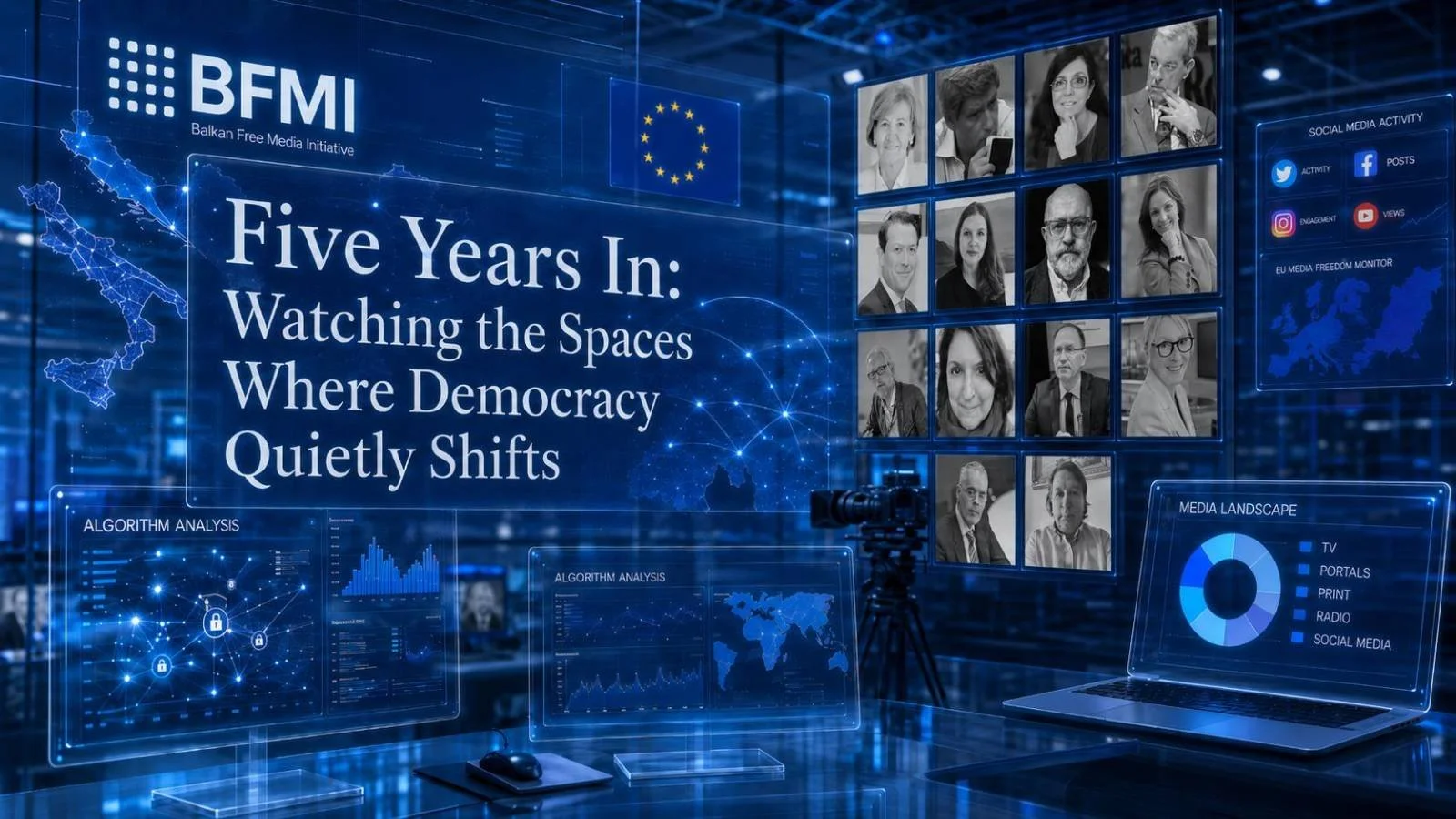
This May, the Balkan Free Media Initiative turns five. Five years since a small group set up shop in Brussels around a quiet but stubborn observation: that some of the most consequential shifts reshaping democratic societies were happening almost out of view, through overlooked structures, slow-moving changes in media environments, and vulnerabilities that rarely made it into mainstream debate.
A lot has changed since then. The information space across Southeast Europe, and far beyond it, looks profoundly different today. Political influence has migrated into digital ecosystems. Algorithms quietly decide what we see, and in doing so, shape what we talk about. Media ownership has concentrated, coordinated online behaviour has grown more sophisticated, and economic pressure and platform dynamics have begun to bend democratic resilience in ways that aren't always visible from the surface, yet run deep into the foundations.
From digging into opaque ownership structures to tracking algorithmic manipulation during elections, BFMI has worked to understand how these systems evolve and how they shape public trust, democratic processes, and the wider European information environment.
What once looked like a regional story turned out to be a European one. The patterns we observed in the Balkans kept reappearing across the continent, the same vulnerabilities, in different accents. That's why BFMI's work has steadily expanded from regional monitoring into broader European conversations on platform accountability, media freedom, information integrity, and democratic resilience.
Along the way, we've also been proud to help build something for the next generation. BFMI contributed to the launch of the SmartScroll Academy, dedicated to helping young people navigate the increasingly complicated world of online information, equipping them with the critical tools to think clearly in a noisy digital landscape.
Our work hasn't stayed on the page, either. Over these five years, BFMI has delivered policy briefings and tailored training sessions for political actors, sharing the kind of granular, evidence-based insight that policymakers rarely get from elsewhere. Our research and findings have been presented and discussed inside European institutions, including the European Parliament, feeding into debates on electoral integrity, online manipulation, and the protection of democratic discourse.
We've also seen our work resonate well beyond closed-door meetings. BFMI's investigations and analyses have generated extensive media coverage, both regionally and internationally, helping bring overlooked structural issues into wider public view. And our most recent campaigns have produced concrete results on defunding disinformation and tackling inauthentic behaviour on social media platforms, areas where, until recently, accountability felt almost out of reach.
Through all of this, one principle has only grown sharper: the information space should be treated as critical infrastructure. If our roads, water systems, or power grids faced the same levels of contamination, opacity, and coordinated pressure that today's information environments endure, emergency response would be immediate and unquestioned. Democratic societies deserve the same seriousness when it comes to the integrity of their information ecosystems.
Looking ahead
Five years on, the challenge hasn't shrunk. It's bigger, faster, and more deeply structural than ever.
BFMI remains committed to watching the practices and systems too often overlooked, the ones quietly shaping media environments across Southeast Europe and the European Union, and to bringing evidence-based, results-oriented analysis to the wider democratic conversation.
Because in the end, democracy rests on something deceptively simple: information you can trust.
The BFMI Management Committee