Media Reform is a Test of Albania’s EU Readiness
The Balkan Free Media Initiative (BFMI) strongly supports advocacy efforts by international and Albanian organisations, first calling for the full decriminalisation of defamation and second emphasising the importance of an independent public broadcaster. For Albania to remain one of the EU’s frontrunners in membership talks, the country must take further action against media capture.
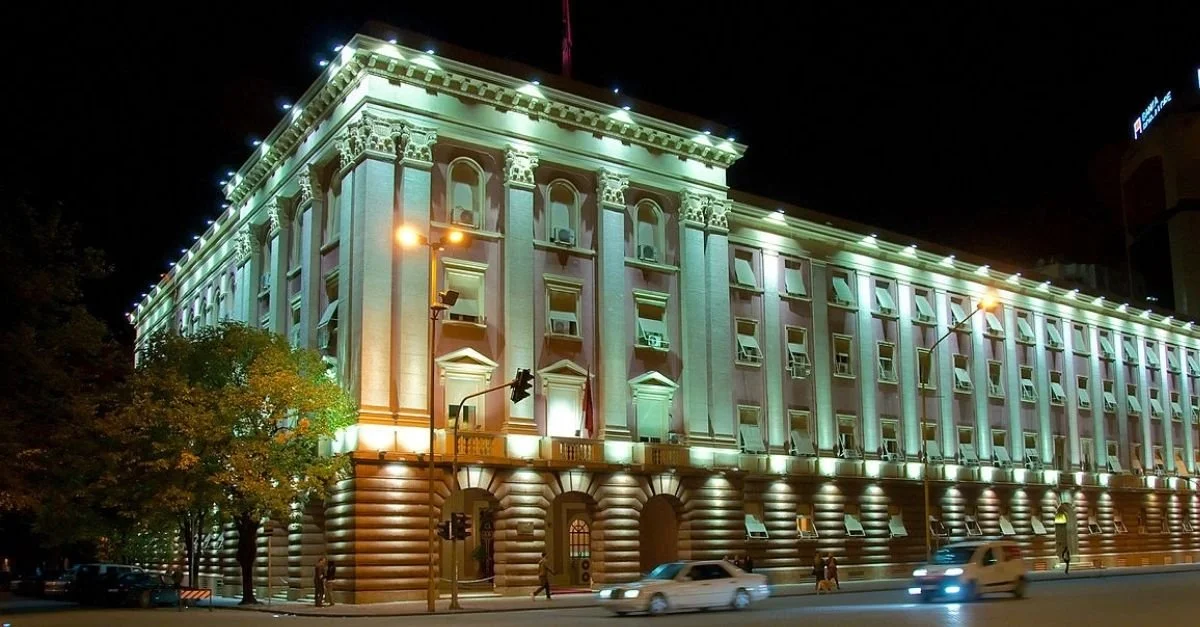
Albanian Parliament; Image Source: Wikimedia
While Albania’s media landscape is formally pluralistic, like much of the rest of the Western Balkans, structural issues undermine true independence and long-term sustainability. Business and political influences eclipse newsrooms and threaten journalist safety, while weak regulatory enforcement and ownership concentration create barriers for a thriving media ecosystem. Defamation legislation can be abused for intimidation and financial starvation, worsening environments like Albania’s that are already captured and stacked against independent, credible reporting–including from public service media.
In this context, recent amendments to Albania’s criminal code create worrying legal uncertainties for journalists and outlets. Though the partial decriminalisation of defamation is a step in the right direction, the status-based exemptions are not only insufficient, but also risk being misused in a highly politicised information environment like Albania’s. Local organisations have emphasised that the usage of “registered and recognised” journalists in the amendments is not only vague, but also echoes prior calls by the current government to regulate the profession in ways that risk making protection uneven. Moreover, insult remains a criminal offence in the country, which we know from other parts of the region, like EU member states Bulgaria and Croatia, can create significant chilling effects.
Already ranked in Southeastern Europe among top-risk countries for SLAPPs (Strategic Lawsuits Against Public Participation), Albania’s current provisions have the potential to exacerbate the problem. This is especially true for investigative journalists covering critical, yet divisive, anti-corruption topics, which continue to make headlines week after week.
BIRN is just one outlet that has faced defamation and insult lawsuits for its anti-corruption reporting, and it would remain vulnerable to additional SLAPPs without an overhaul of the new amendments. Its investigative reporting on state-business links continues to trigger lawsuits carrying disproportionate financial damages, even if the claims lack evidence. Without early-dismissal mechanisms, damage caps, and other safeguards against bogus lawsuits, these cases can decimate media holding public and private entities to account. Again, while it is heartening that outlets like BIRN are now protected against criminal charges related to defamation, the criminal code still does not go far enough in protecting their work from potential retaliation.
Another positive from the package of amendments is greater protection for journalist safety, a change that BFMI welcomes. The political establishment’s hostility towards journalists was laid bare back in March 2024, when Albanian Prime Minister Edi Rama had a physical altercation with a young female journalist at a press conference. Albanian media, like many of their counterparts in other Western Balkan countries, have therefore faced both structural hurdles and daily antagonism. Media professionals deserve these new protections, but also more robust ones that address the core challenges to their work due to its politicisation.
Recent statements by Rama regarding the future of Albania’s public broadcaster, RTSH, do not signal a positive shift for media freedom. For Albania to continue progressing towards EU membership, structural reforms in line with legislation like the European Media Freedom Act are sorely needed. This not only includes full decriminalisation of defamation and insult, but also protections for public service media and other measures for editorial independence and transparent media financing. While recognising authorities’ progress via partial decriminalisation and the accompanying measures for journalist safety, BFMI joins its partners in Albania and the region in urging for more extensive media reform that prioritises depoliticisation and meets or exceeds EU standards.
Our readers read next: