How a fake journalist reached Bosnian readers
Fake journalists. Real publications. Real political consequences.
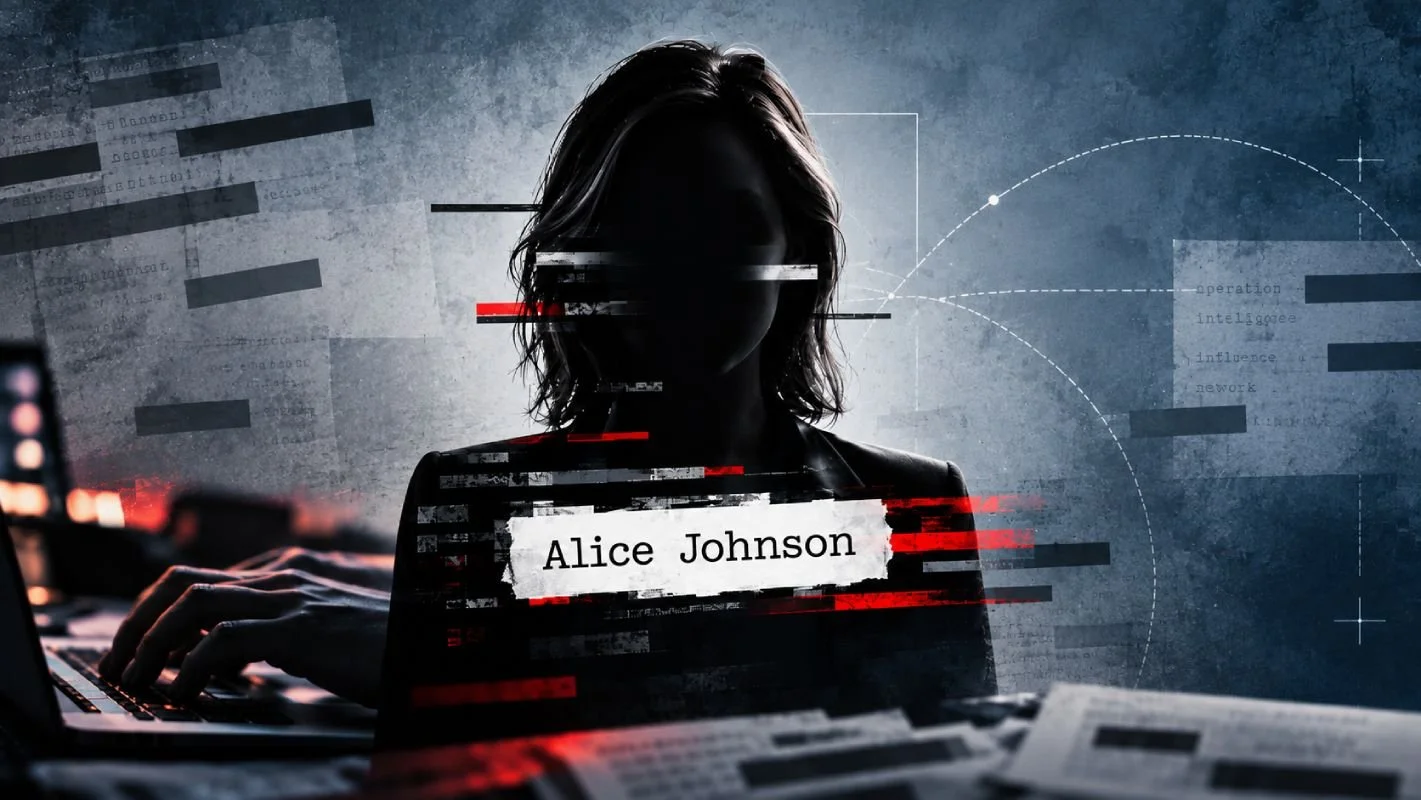
Alice Johnson does not exist. That, at least, is what OpenAI found. Yet this spring her name sat above a commentary on US strategy towards Iran, first in English on Fair Observer on 1 April 2026, then in Bosnian on The Bosnia Times the very next day. Same text. Same byline. On 8 October, OpenAI named her as one of the invented journalists behind a covert influence operation. [1, 2, 4]
OpenAI calls it “Bogus Bylines”. The company describes the operation as originating in Iran, although it could not identify the particular actor running it. Seven fabricated journalists. ChatGPT served as the workshop: operators used it to polish articles to the requirements of individual publications and to draft the emails that pitched them to editors. It worked. By OpenAI’s count, almost 100 articles were published or syndicated across roughly a dozen outlets between July 2025 and October 2026. [1]
The piece is titled “When Strategy Fails, Civilian Infrastructure Becomes the Target”. It attacks US strategy towards Iran, dwelling on threats to energy infrastructure and the Strait of Hormuz. The Bosnian version changes nothing that matters. Author, argument, the order of every paragraph and section: all carried over in translation. Read the two side by side and the conclusion is unavoidable. One commentary, published twice. [2, 4]
Fake bylines need a backstory. Alice had one. Fair Observer’s author page presents her as a writer and policy analyst based in the US, a specialist in foreign policy, international law and the human consequences of military decisions, complete with a list of other publications where she has supposedly written. For a reader skimming the page, or an editor clearing a crowded inbox, that profile signals credibility, relevant expertise and a track record. It is also exactly what now deserves scrutiny. [3]
Bosnian readers got less. Much less. The Bosnia Times credits Alice Johnson alongside its own web address and never mentions Fair Observer as the original publisher, so anyone reading the commentary in their own language had no way of knowing where it came from or who had published it first. Did the Bosnian editors know about the operation? The published pages do not say. We make no assumption that they did. [4]
That is why this case matters to BFMI. It exposes the seam where outside material slips into regional journalism. A newsroom can check every claim in an article and still be fooled about who wrote it. Translation then finishes the job, carrying a false identity to a new audience that has even fewer ways to question the author or follow the text back to its source.
Fake identities are not new to us. Not even this year. False Chorus, BFMI’s research with Clemson University’s Media Forensics Hub, documented coordinated accounts backing the SNSD around Bosnia and Herzegovina’s election, manufacturing an impression of public support that reached all the way into media comment sections. No operational link between that network and Bogus Bylines has been established. The editorial thread is simpler: invented people, used to shape what audiences see around news and politics. [5]
So what should change? Start in the newsroom. Verify unfamiliar contributors independently instead of trusting a polished biography. Name the original publisher every time translated material runs. Keep submission records. And when an identity is exposed as fake, tell readers plainly which articles carried that name and what the publication has established about their origins.
AI companies have work to do too. Their findings help only if others can use them, which means giving regional journalists the article references and identifying details they need to check local outlets and the translations circulating there. Evidence makes corrections possible. It also makes reporting possible.
The English and Bosnian versions are now on the record. That is a start. The harder task is establishing how the article reached the Bosnian outlet and giving readers a transparent account of it, because independent journalism rests on one basic condition. Knowing who is speaking through its pages.
Our readers read next: