When Courts Decide Who a Journalist Is
Another troubling signal for media freedom is coming from North Macedonia.
As reported by the Organized Crime and Corruption Reporting Project (OCCRP), the Skopje Court of Appeal has upheld a defamation ruling against journalists from the Investigative Reporting Lab (IRL) and its editor-in-chief, Saška Cvetkovska.
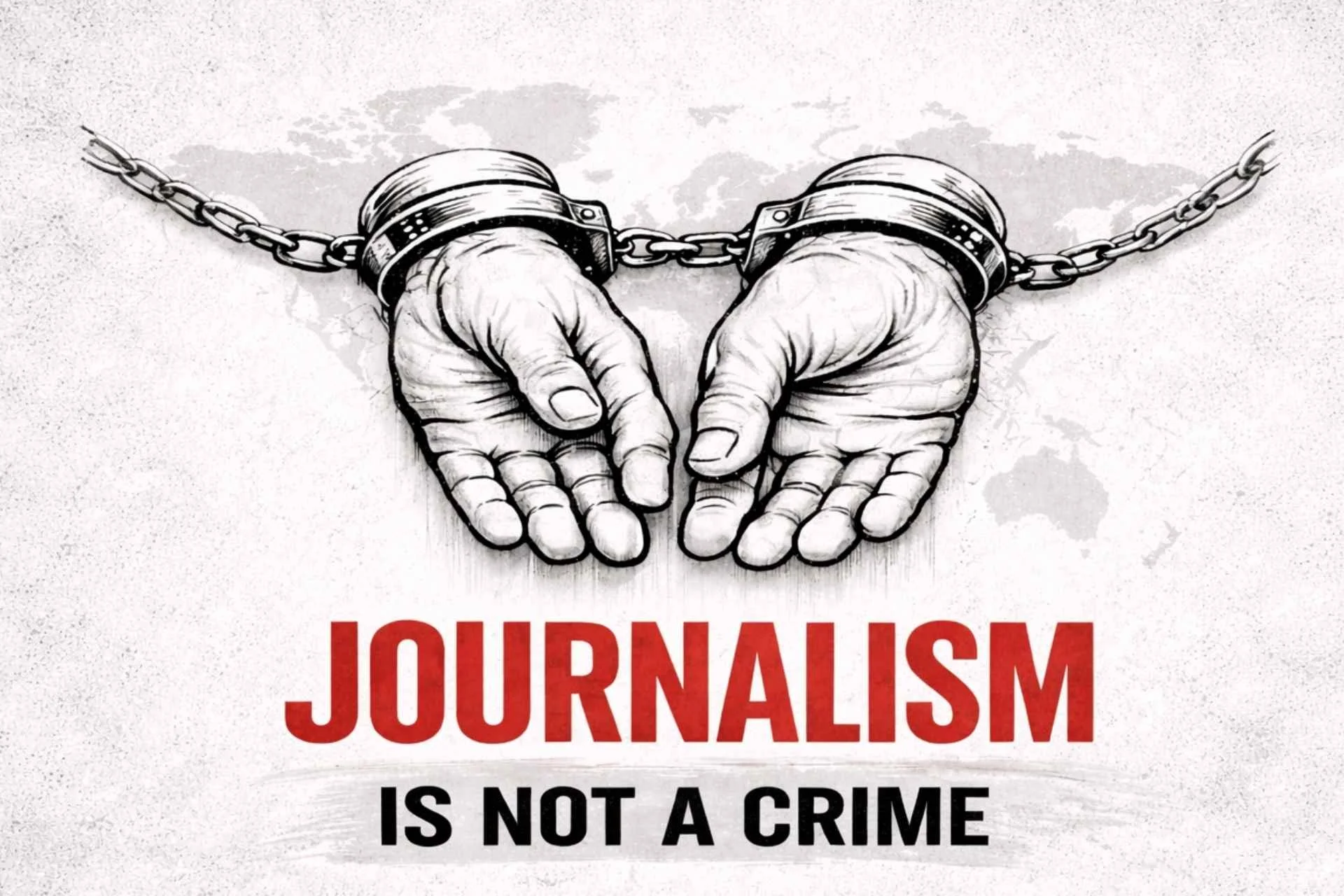
The case relates to an investigative documentary examining the use of allegedly polluting fuel oil in public hospitals, reporting that touched on business interests linked to former deputy prime minister Kočo Angjušev.
But what makes this ruling particularly alarming is not only the verdict itself.
In its reasoning, the court reportedly argued that IRL should not be considered a media outlet and that Cvetkovska is not a journalist.
This is where the case moves beyond a typical defamation dispute.
Across Europe, some of the most important corruption investigations are carried out by non-profit investigative centers, collaborative reporting networks, and independent investigative labs. They work across borders, often with limited resources, precisely to investigate stories that traditional media sometimes cannot pursue.
If courts begin narrowing the definition of what counts as “media,” they risk undermining the very ecosystem that has made modern investigative journalism possible.
For many observers, the case also bears the familiar features of a SLAPP lawsuit — legal action brought by powerful actors that creates financial and legal pressure on journalists reporting on issues of public interest.
Even when journalists ultimately prevail, the process itself can become the punishment.
The timing matters as well. North Macedonia is a candidate for membership in the European Union, where the rule of law and protection of media freedom are core accession benchmarks.
In that context, rulings that appear to question the legitimacy of investigative journalism send the wrong signal — both domestically and to European partners.
The journalists involved say they will continue the legal fight, potentially bringing the case before the European Court of Human Rights.
And perhaps that is where this debate ultimately belongs.
Because the real question raised by this case is simple:
In a democratic society, who gets to decide who is a journalist?
If the answer becomes “the courts,” the space for independent investigative reporting could shrink quickly.
And that would not only be a problem for journalists in North Macedonia, but for democratic accountability across the region.
Source: Reporting by the Organized Crime and Corruption Reporting Project on the ruling against the Investigative Reporting Lab (IRL).
Our readers read next: