The EU built a shield for elections like Bulgaria’s. Whether it holds is another matter
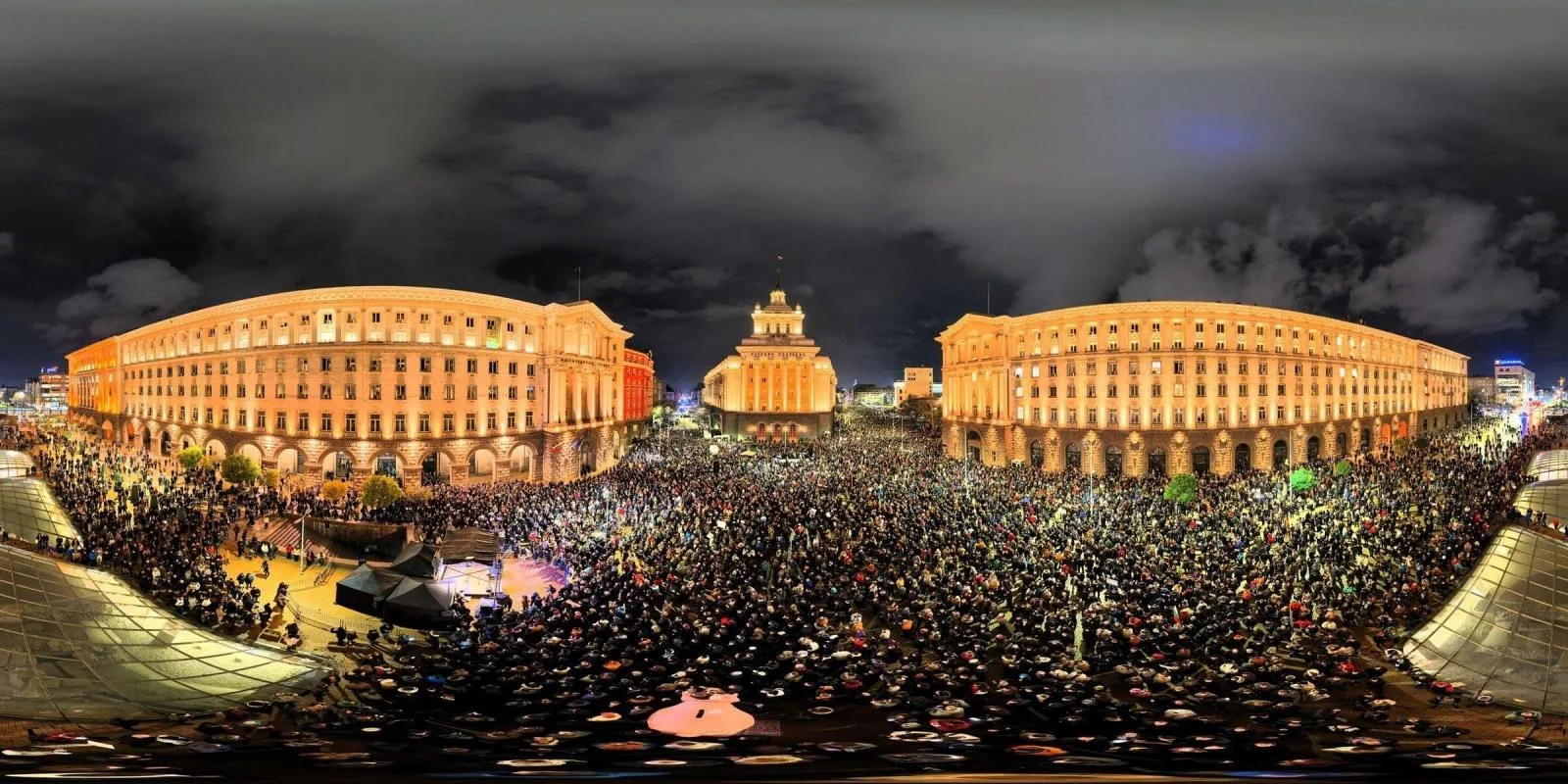
Bulgaria votes in three weeks. Its information environment is already being shaped by forces that nobody is controlling or investigating, and nobody seems particularly rushed to understand.
This is not, on the surface, a surprising state of affairs.
Bulgaria is a small country holding its eighth election in five years, in a spring already crowded with consequential European votes.
Hungary’s election on 12 April has attracted far more attention in Brussels, and understandably so. Viktor Orbán’s 15-year tenure, his relationship with Moscow, his systematic dismantling of democratic institutions — these are well-documented and well-watched.
The bandwidth of European institutions is not unlimited, and Bulgaria, chronic and unglamorous in its political dysfunction, tends to fall to the bottom of the list.
Bulgaria enters this election carrying the accumulated weight of genuine failures.
Economic anxiety after a turbulent euro transition, institutional exhaustion after recurring inconclusive elections, a political class that has exhausted public trust without resolving the problems that triggered the crisis — fear-based content does not need to be planted in that landscape.
The result is an information environment in which it is genuinely unclear where public sentiment ends and manufactured momentum begins.
This week, the caretaker government triggered the Digital Services Act’s Rapid Response System, two days after a monitoring report by the Balkan Free Media Initiative (BFMI) and Sensika documented coordinated digital manipulation at scale in Bulgaria’s information environment.
The mechanism coordinates action between member states, regulators, and platforms ahead of sensitive votes.
That Bulgaria is not alone in needing this mechanism offers little comfort. Moldova, Romania, and Hungary have all reached for it ahead of elections, which says something about the state of Europe’s information environment as much as it does about the individual countries concerned.
The report’s findings centre on former president Rumen Radev, who leads the polls and whose positions on Russia and Ukrainian defence have never quite aligned with European consensus.
Without an official TikTok account, he has accumulated 90 million views on the platform through networks whose behaviour is difficult to explain through organic activity alone.
Delian Peevski, a Magnitsky-sanctioned oligarch also in the race, runs a parallel operation across a cluster of near-identical accounts.
The platforms have said nothing. Neither has the electoral commission.
The now-activated mechanism assumes a level of institutional readiness that Bulgaria does not have.
There is no national body monitoring coordinated digital behaviour, no working relationship between state institutions and the platforms, and very loosely a civil society effort that is yet to be coordinated.
The Central Electoral Commission has not opened an investigation, despite evidence in the public domain for weeks. A coordination mechanism is only as useful as the institutions it has to work with. In Bulgaria, those institutions are largely absent.
Meta and TikTok carry a legal obligation under European law to identify and mitigate risks to electoral processes.
The evidence from Bulgaria meets that threshold, but a parliamentary election in Sofia will not rise to the top of any platform’s queue unprompted.
That is what European regulatory pressure exists to change.
The European Commission compelled TikTok to answer for Romania, but that reckoning came after the damage was done.
Bulgaria’s evidence is here before the vote. Whether Brussels acts on that advantage before 19 April is the practical test of Europe’s commitment to democratic resilience, in a country that has never been easy to keep on the agenda.
This piece was first published in EUobserver, a media outlet covering underreported European affairs since 2000. It is republished here to further amplify its message.
The author is Vanesa Valcheva, a Research Project Coordinator at the Balkan Free Media Initiative (BFMI).
Our readers read next: