What our Bulgaria findings mean for the European Democracy Shield
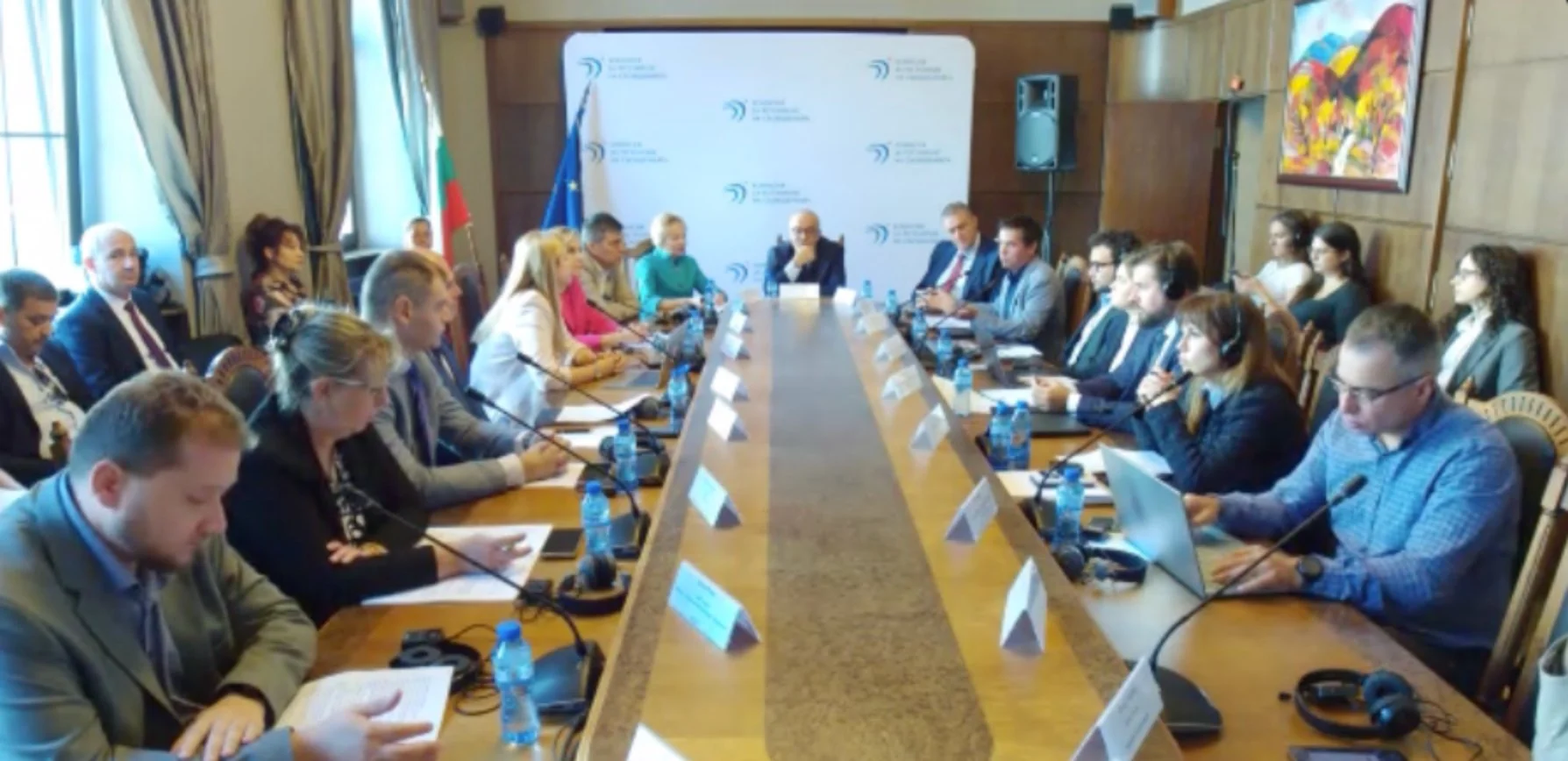
On Monday, 4th May, BFMI addressed the European Parliament's Special Committee on the European Democracy Shield. The conversation gave us the opportunity to draw out what two months of monitoring the Bulgarian electoral cycle suggests about a framework still under negotiation, and where its current shape risks carrying forward the gaps that the Bulgarian case has brought into view.

The category problem
The EUDS is being designed inside a conceptual inheritance shaped by FIMI, and FIMI is shaped, in turn, by a working assumption that the principal threat to electoral information integrity is external. It now requires explicit revision. The manipulation we documented operates inside the lawful space of domestic political competition, is generated by actors with a stake in the electoral outcome, and benefits multiple political forces simultaneously. It does not behave like foreign interference and the analytical instruments built to identify foreign interference will continue to miss it.
This is the first point on which the Shield's design needs to be assessed. A framework whose default threat model assumes externality will treat domestic, multi-partisan, algorithmically distributed manipulation as a residual category. The Bulgarian evidence suggests it is becoming a primary one, at least in the parts of Europe where information environments are most capturable. If the Centre for Democratic Resilience is built around a definition of the threat that the threat itself has already outgrown, the institution will deliver situational awareness about a problem adjacent to the one its member states are actually facing.
Definitional asymmetry as a regulatory problem
The Bulgarian case also exposes something the existing Digital Services Act architecture has not yet been required to confront, which is the asymmetric application of platform-level definitions to identical underlying behaviour. The same network can meet one platform's threshold for coordinated inauthentic behaviour and fall below another's, with no regulatory mechanism reconciling the two. The consequence is that enforcement becomes a function of which platform a network primarily uses, not of whether the conduct itself warrants action.
For the EUDS, this matters because the Shield is being positioned as the strategic layer above the Digital Services Act's compliance machinery. If the Shield does not address definitional convergence directly, it will inherit a regulatory environment in which platform discretion determines the contours of European electoral defence. The work BFMI did in Bulgaria, submitting comparable evidence to two platforms and receiving categorically different responses, is a small empirical demonstration of a much larger structural issue. The Shield has an opportunity to require, at minimum, a shared evidentiary threshold for electoral periods within EU jurisdiction. Without that, the Centre for Democratic Resilience will produce coordination among institutions that are already coordinated, while the actual decision points remain inside private platform governance.
The civil society interface, and what it is for
The most consequential question for the Shield's architecture, and the one on which our Brussels intervention concentrated, concerns the relationship between the proposed Centre for Democratic Resilience and the civil society organisations whose work currently produces the evidence on which platform enforcement turns. The Bulgarian outcome was the product of a small organisation generating structured submissions at a tempo and granularity that platforms could act upon. That is an unstable foundation for European electoral defence, and the Shield's design needs to acknowledge it as such.
In addition to acknowledgement, the Shield has an opportunity to build a structured channel through which evidence of the kind identified in our trackers enters the European institutional process with defined timelines and feedback obligations on the platforms receiving it. This is the operational recommendation we put before the Committee, and it is the one on which the Shield's effectiveness, in our view, will most directly depend. An evidence pathway, with procedural weight and platform-side accountability, can be effective.
The window to February
The Special Committee's mandate now runs to February 2027. That extension is welcome, and it changes the strategic shape of the period ahead. The Committee will be sitting through the autumn and winter electoral cycle in the Balkans, which means the work it produces in 2026 can be informed by evidence drawn from elections that have not yet taken place, and the findings of that period can shape the Shield's framework before the Committee concludes.
Bosnia and Herzegovina votes on October 4th, in an information environment shaped by constitutional crisis, documented dormant networks and the absence of Digital Services Act jurisdiction. BFMI will monitor that cycle and produce structured submissions to platforms that will be published accordingly.
The Bosnian case will speak to a different question than the Bulgarian one did, which is what European electoral defence looks like in jurisdictions adjacent to the EU but outside its formal architecture. That is a question the Shield will eventually have to answer, and the extension of the Committee's mandate gives it the time to take that answer seriously. The decisions taken between now and February will determine whether the Centre for Democratic Resilience is designed around the threats the FIMI framework was built to identify, or the ones the evidence is now pointing to of domestic meddling.
Our readers read next: